
State University
4,5
(553)
· Google
Abdullah Gül University
Abdullah Gül Üniversitesi
- Kayseri
- Founded 2010
- 2 campuses
Overview
Abdullah Gül University (AGU) is a public university located in Kayseri, Turkey. Established in 2010, the university began admitting students in the 2013–2014 academic year. AGU offers twelve undergraduate and eleven graduate programs across five schools.
Abdullah Gül University is a state university based in Kayseri, founded in 2010. It teaches on 2 campuses. Its academic units include 5 faculties, and the ÖSYM guide lists 15 associate and bachelor programmes. In 2025-2026 it had 3,936 students; 427 graduated in 2024-2025 (YÖK).At a glance
- When and where was Abdullah Gül University founded?
- Abdullah Gül University is a state university based in Kayseri, founded in 2010. Source: YÖK.
- How many students does Abdullah Gül University have?
- 3,936 students in 2025-2026; 427 graduated in 2024-2025. Source: YÖK Higher Education Information System.
- How many students per faculty member does Abdullah Gül University have?
- 36.8 students per faculty member in 2025-2026 (107 faculty members, 300 teaching staff; formal and evening students). Source: YÖK.
- How many campuses does Abdullah Gül University have?
- 2 campuses: , .
- How many associate and bachelor programmes does Abdullah Gül University offer?
- The ÖSYM guide lists 15 programmes. Source: ÖSYM.
- Which rankings list Abdullah Gül University?
- URAP (University Ranking by Academic Performance) 2025-2026: world 56, Türkiye 56; Times Higher Education World University Rankings 2027: world 801-1000, Türkiye 7; SCImago Institutions Rankings 2026: world 6358, Türkiye 46; TÜBİTAK Girişimci ve Yenilikçi Üniversite Endeksi 2024: world 47, Türkiye 47. Positions as published by each ranking.
Photos
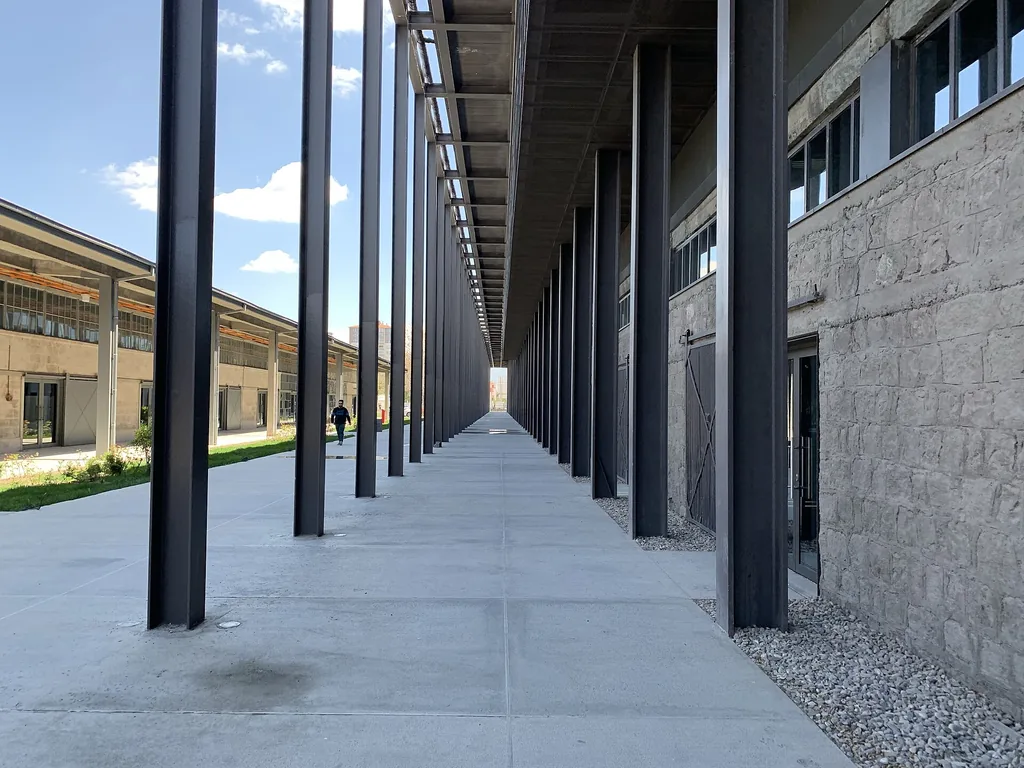
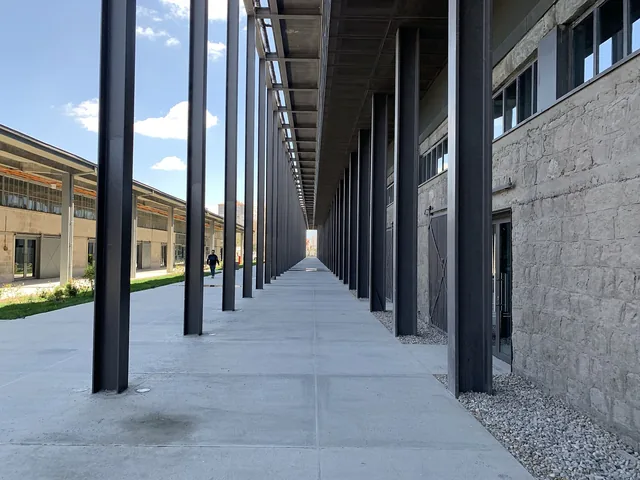
Freely licensed photos from Wikimedia Commons; the author and licence of each are shown.
Campuses
2 campuses
Academic structure
- Associate
- 0
- Bachelor’s
- 15
- Master’s
- 0
- Doctorate
- 0
Faculties 5
-
Programme Score type Quota 2025 lowest score 2025 rank · 4 yrs SAY 80 442,53 53.079 · 4 yrs SAY 50 430,68 64.728 · 4 yrs SAY 75 419,17 76.943 · 4 yrs SAY 50 403,54 94.595 · 4 yrs SAY 20 386,70 115.817 · 4 yrs SAY 30 335,76 204.223 Source: ÖSYM 2026 Higher Education Programmes and Quotas Guide
-
Programme Score type Quota 2025 lowest score 2025 rank · 4 yrs EA 30 340,29 155.309 · 4 yrs EA 1 — — · 4 yrs EA 25 357,35 105.758 Source: ÖSYM 2026 Higher Education Programmes and Quotas Guide
-
Programme Score type Quota 2025 lowest score 2025 rank · 4 yrs SAY 35 327,87 223.123 · 4 yrs SAY 30 369,35 140.663 · 4 yrs SAY 1 — — Source: ÖSYM 2026 Higher Education Programmes and Quotas Guide
-
Programme Score type Quota 2025 lowest score 2025 rank · 4 yrs SAY 40 358,13 159.168 Source: ÖSYM 2026 Higher Education Programmes and Quotas Guide
-
Programme Score type Quota 2025 lowest score 2025 rank · 4 yrs EA 40 380,15 57.653 · 4 yrs EA 30 337,22 165.975 Source: ÖSYM 2026 Higher Education Programmes and Quotas Guide
Graduate Schools 3
Schools 1
Rankings
In international rankings
- Times Higher Education World University Rankings 2027 World 801-1000 · Türkiye 7 ↗
- SCImago Institutions Rankings 2026 World 6358 · Türkiye 46 ↗
- URAP (University Ranking by Academic Performance) 2025-2026 World 56 · Türkiye 56 ↗
- TÜBİTAK Girişimci ve Yenilikçi Üniversite Endeksi 2024 World 47 · Türkiye 47 ↗
From the publishers’ own lists; not part of the Yerleske Index.
Students and graduates
From YÖK’s official statistics; archived every year.
- Students
- 3.936
- 2025-2026 academic year
- New students
- 746
- 2025-2026 academic year
- Graduates
- 427
- 2024-2025 graduates
- Female students
- %51,9
- 2.044 / 3.936
By level
-
Bachelor 3.692 %94
-
Master 181 %4,6
-
Doctorate 63 %1,6
By mode of study
-
Formal 3.936 %100
Over the years
| Academic year | Students | New students | Graduates |
|---|---|---|---|
| 2014-2015 | — | — | 1 |
| 2015-2016 | 485 | 199 | 4 |
| 2016-2017 | 764 | 251 | 11 |
| 2017-2018 | 1.025 | 320 | 89 |
| 2018-2019 | 1.408 | 589 | 126 |
| 2019-2020 | 1.910 | 808 | 133 |
| 2020-2021 | 2.417 | 862 | 155 |
| 2021-2022 | 2.905 | 934 | 177 |
| 2022-2023 | 3.399 | 990 | 284 |
| 2023-2024 | 3.708 | 980 | 350 |
| 2024-2025 | 3.947 | 946 | 427 |
| 2025-2026 | 3.936 | 746 | — |
- Teaching staff · 2025-2026
- 300
- Faculty members
- 107
- Students per faculty member
- 36,8
Research output
Publications, citations and journal quartiles, compiled from open bibliographic records (OpenAlex).
- Publications
- 2.771
- Citations
- 77.718
- h-index
- 113
- Journal articles · 2021–2025
- 1.117
- Q1 share
- %56,1
- TR Dizin articles · 2021–2025
- 225
- Open access
- %62,0
- Articles per faculty member
- 2,09
2021
2022
2023
2024
2025
Publications Citations to that year’s publications
| Academic year | Publications | Citations to that year’s publications |
|---|---|---|
| 2021 | 249 | 5516 |
| 2022 | 272 | 4859 |
| 2023 | 321 | 3646 |
| 2024 | 331 | 2578 |
| 2025 | 296 | 651 |
Units publishing the most · 2021–2025
- Mühendislik Fakültesi Q1 %50 397
- Yaşam ve Doğa Bilimleri Fakültesi Q1 %40 108
- Mimarlık Fakültesi 19
- İnsan ve Toplum Bilimleri Fakültesi 18
- Fen Bilimleri Enstitüsü 8
- Bilgisayar Bilimleri Fakültesi 3
- Yabancı Diller Yüksekokulu 3
- Yönetim Bilimleri Fakültesi 1
Articles by journal quartile · 2021–2025
-
Q1 475 %56
-
Q2 265 %31
-
Q3 85 %10
-
Q4 21 %2,5
Articles in journals without a quartile (not in the SCImago list) are left out of the distribution.
Leading research topics
- Energy, Environment, Economic Growth
- Quantum Dots Synthesis And Properties
- Bioinformatics and Genomic Networks
- Gene expression and cancer classification
- Concrete and Cement Materials Research
- Boron and Carbon Nanomaterials Research
- Semiconductor Quantum Structures and Devices
- Organic Electronics and Photovoltaics
Journals published in most · 2021–2025
- Bitlis Eren Üniversitesi Fen Bilimleri Dergisi 13
- Applied Sciences Q2 12
- ACS Omega Q1 11
- Arabian Journal for Science and Engineering Q1 9
- Journal of Non-Crystalline Solids Q2 8
- Environmental Science and Pollution Research Q1 8
Most published academics · 2021–2025
| Name | Articles (5 yrs) | Citations | h-index |
|---|---|---|---|
| Eyup Dogan Economics, Econometrics and Finance | 45 | 15.363 | 57 |
| Burcu Bakır-Güngör Mühendislik Fakültesi › Bilgisayar Mühendisliği Bölümü | 43 | 1.501 | 24 |
| Umut Türk Social Sciences | 29 | 409 | 11 |
| Ekin Köken Mühendislik Fakültesi › Nanoteknoloji Mühendisliği Bölümü | 29 | 251 | 10 |
| Niğmet Uzal Mühendislik Fakültesi › İnşaat Mühendisliği Bölümü | 24 | 1.797 | 23 |
| Evren Mutlugün Mühendislik Fakültesi › Elektrik-Elektronik Mühendisliği Bölümü | 23 | 3.518 | 34 |
| Murat Durandurdu Mühendislik Fakültesi › Nanoteknoloji Mühendisliği Bölümü | 21 | 1.470 | 21 |
| Soner Top Mühendislik Fakültesi › Nanoteknoloji Mühendisliği Bölümü | 21 | 569 | 13 |
| Ali Ersin Dinçer Mühendislik Fakültesi › İnşaat Mühendisliği Bölümü › Hidrolik Anabilim Dalı | 20 | 507 | 15 |
| Hakan Usta Mühendislik Fakültesi › Nanoteknoloji Mühendisliği Bölümü | 18 | 6.404 | 36 |
Counts journal articles with fewer than 50 authors over the last five complete years; listed when OpenAlex gives this university as their latest institution. If a record is wrong or you prefer not to be listed, use “Report an error”.
Source: OpenAlex records (CC0, openalex.org); journal quartiles from SCImago Journal Rank 2025. Figures may differ from institutions’ own reports or from Web of Science/Scopus, whose coverage differs. TR Dizin figures: TÜBİTAK ULAKBİM TR Dizin records, search.trdizin.gov.tr OpenAlex record · Updated: 09.10.2026
All research data →News and announcements
As published on the university’s own website; headlines link to the official page.
-
Announcement2018-2019 Eğitim-Öğretim Yılı Bahar Yarıyılı Kurumiçi Yatay Geçiş İşlemleri (opens on the official site)
w2.agu.edu.tr
-
Announcement2018-2019 Eğitim-Öğretim Yılı Yaz Okulu Dersleri ve Ücretleri (opens on the official site)
w2.agu.edu.tr
-
Announcement2019-2020 Eğitim-Öğretim Yılı Güz Yarıyılı Yatay Geçiş Duyurusu (opens on the official site)
w2.agu.edu.tr
-
Announcement2019-2020 Eğitim-Öğretim Yılı Güz Yarıyılı Ders Seçimleri (opens on the official site)
w2.agu.edu.tr
Source: agu.edu.tr · updated daily · content lives on the official site.
Campus life
Libraries, dining, sports and health facilities across campuses.
- ATM 1
- Sports Centre 3
- Gym 1
- Library 1
Contact
© OpenStreetMap contributors
Directions
- Website
- agu.edu.tr
- ozelkalem@agu.edu.tr
- Phone
- 0352 224 88 00
- Address
- Barbaros Mahallesi Sümer Kampüsü Kocasinan-KAYSERİ
Student reviews
Moderated reviews by students verified with their university e-mail.
No published reviews yet. Be the first to write one.
Sources
Sources and verification status of the information on this page.
Where does this information come from?
- Last verified:
- 5 October 2026
- Last updated:
- 6 October 2026
- Sources:
- 15
- Legal name Official source YÖK Yükseköğretim İstatistikleri — Üniversiteler Hakkında Genel Bilgiler Confidence: High confidence · 97
- Institution type Official source YÖK Yükseköğretim İstatistikleri — Üniversiteler Hakkında Genel Bilgiler Confidence: High confidence · 97
- City Official source YÖK Yükseköğretim İstatistikleri — Üniversiteler Hakkında Genel Bilgiler Confidence: High confidence · 97
- Founded Official source YÖK Yükseköğretim İstatistikleri — Üniversiteler Hakkında Genel Bilgiler Confidence: High confidence · 97
- Website Official source YÖK Yükseköğretim İstatistikleri — Üniversiteler Hakkında Genel Bilgiler Confidence: High confidence · 97
- E-mail Official source YÖK Yükseköğretim İstatistikleri — Üniversiteler Hakkında Genel Bilgiler Confidence: High confidence · 97
- Phone Official source YÖK Yükseköğretim İstatistikleri — Üniversiteler Hakkında Genel Bilgiler Confidence: High confidence · 97
- Address Official source YÖK Yükseköğretim İstatistikleri — Üniversiteler Hakkında Genel Bilgiler Confidence: High confidence · 97
- Bachelor programmes Official source ÖSYM 2026 YKS Kontenjan Kılavuzu (Tablo-4) Confidence: High confidence · 97
- Official domain Public source Serper discovery Unverified Confidence: High confidence · 90
- Description Public source Yerleske kayıtlarından derlendi (YÖK, ÖSYM, resmî site) Confidence: Medium confidence · 80
- English name Public source Wikidata (Q6083428) Unverified Confidence: Medium confidence · 72
- Location Public source Wikidata (Q6083428) Unverified Confidence: Medium confidence · 72
- Summary Public source Wikipedia — Abdullah Gül University Unverified Confidence: Medium confidence · 72
About source types and confidence scores: Data sources
Image credits (13) Show sources Hide sources
- Logo: Abdullah Gül University · Public domain · Wikimedia Commons
- Cover photo: Boubacar Amadou Cisse · CC BY-SA 4.0 · Wikimedia Commons · licence
- Gallery: Zafer · CC BY-SA 4.0 · Wikimedia Commons · licence
- Gallery: Zafer · CC BY-SA 4.0 · Wikimedia Commons · licence
- Gallery: Zafer · CC BY-SA 4.0 · Wikimedia Commons · licence
- Gallery: Zafer · CC BY-SA 4.0 · Wikimedia Commons · licence
- Gallery: Zafer · CC BY-SA 4.0 · Wikimedia Commons · licence
Report a mistake
Our editors review suggestions; nothing is published directly.